overcast clouds 12.2°C
 English
 Česky
Česky Deutsch
 Русский
Tourist Attractions
Loket Castle
Loket is a very old town with a castle of the same name. Both rise above the valley of the Ohře River between Karlovy Vary and Sokolov.
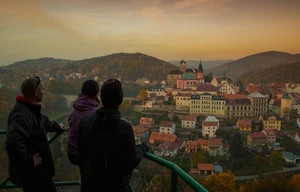
Komorní hůrka educational trail
Komorní Hůrka is our youngest volcano – it was known to be active around 850,000 years ago, with some evidence suggesting it only became dormant as recently as 350,000 years ago.
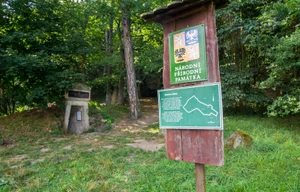
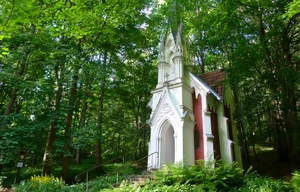
Laska Chapel
The director of the local theatre Julius Laska had this chapel built in 1909 in memory of his mother. It is a small, pretty, neo-Gothic building set against a forest backdrop.
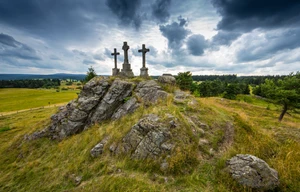
Three Crosses - Tři Křížky
The three crosses were erected here as a symbol of gratitude by spa patient who had been cured of their ailment in 1859. Endemite cerastium alsinifolium grows here, a plant not found anywhere else in the world. For this reason, entrance into the territory of the reservation is strictly prohibited.
D-Club Dyleň
Put on your dancing shoes and get ready to groove in D-Club. In Addition to classic weekend dance parties you can party here with leading Czech and Slovak dance, pop and rap artists.

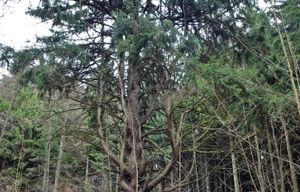
King of Spruces - Král smrků
This protected spruce rises northwest of Marianske Lazne between "Svobody" alley and "Smetana" alley. The spruce is estimated to be 200 years old and is a truly majestic tree - the trunk circumference is 450cm and it is 39 m tall. It first emerged from the ground around 1818 when Mariánské Lázně was first declared a public spa. In March 2017 strong wind got the better of the spruce which fell. A fallen tree remains protected, so it can still be admired where it lies.
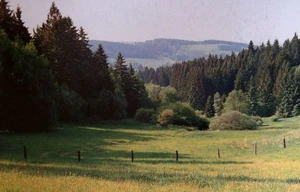
Pístov Meadow - Pístovská louka
Pístov Meadow is formed by a small meadow enclave on the edge of the forest in a slightly kerfed valley 1 km southeast of Pístov.
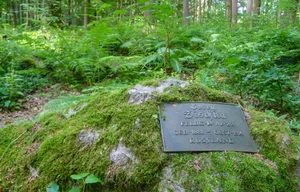
Charles Cross - Karlův kříž
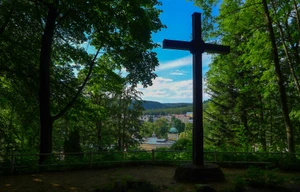
The cross stands above the town's market hall. This is an authentic historic attraction visited by many prominent personalities who were eager to take in the view of the valley that Mariánské Lázně occupies..
Kynžvart Rock - Kynžvartský kámen
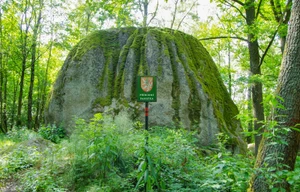
Kynžvart Kámen is one of the lesser known natural monuments of Slavkovský Forest. It’s located not far from the old route connecting the train station of Lázně Kynžvart with the town itself, north of Luční Pond.
Clements' Place
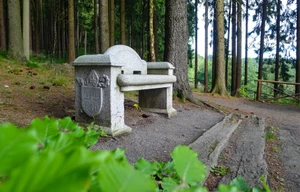
Its beauty and serenity made this place a favourite with the Abbot Alfréd Clements of Teplá. A simple wooden bench stood here where the dignitary often used to sit. During his time as Abbot, Mariánské Lázně experienced the largest building boom of its early development (1888–1900).
The park at the Forest Spring
The park at the Forest Spring is located in the northern part of the town off Třebízského street. Here you'll find a pavilion containing the Forest Spring, the Goethe and Muse sculpture by German sculptor Heindrich Drake, a memorial stone for the writer Vaclav Václav Beneš Třebízský and a sculpture of three muses by O. Zoubek. Nearby you'll also find a music pavilion used in summer as a cafe and a venue for musical performances.